
Keywords or Title
Typologies
Date
Catalog number
Location
Provenance
Ordenar per
CATALOGUE RAISONNÉ OF WORKS BY XAVIER NOGUÉS
With the support of:

©Dani Rovira
V0103
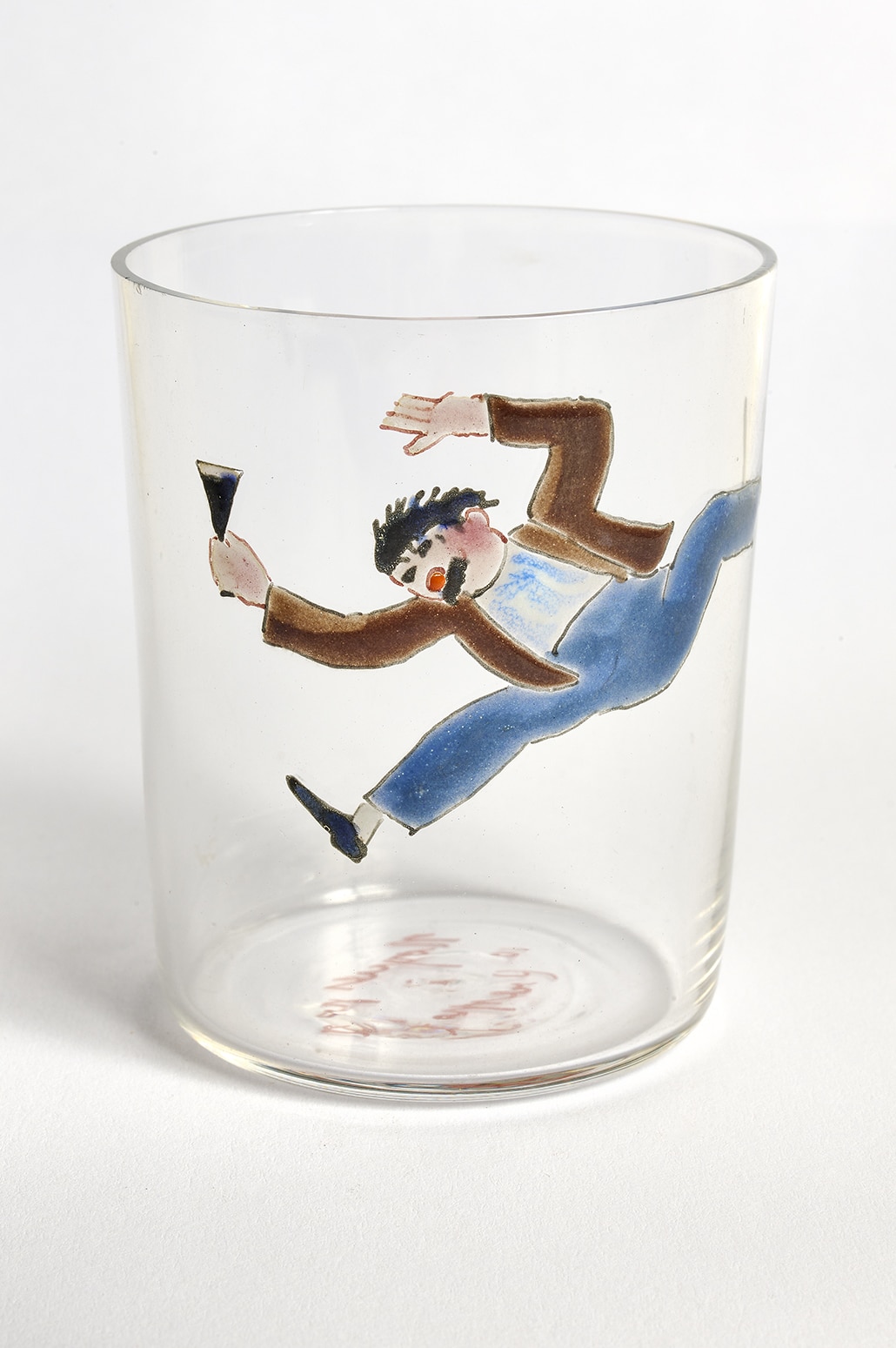
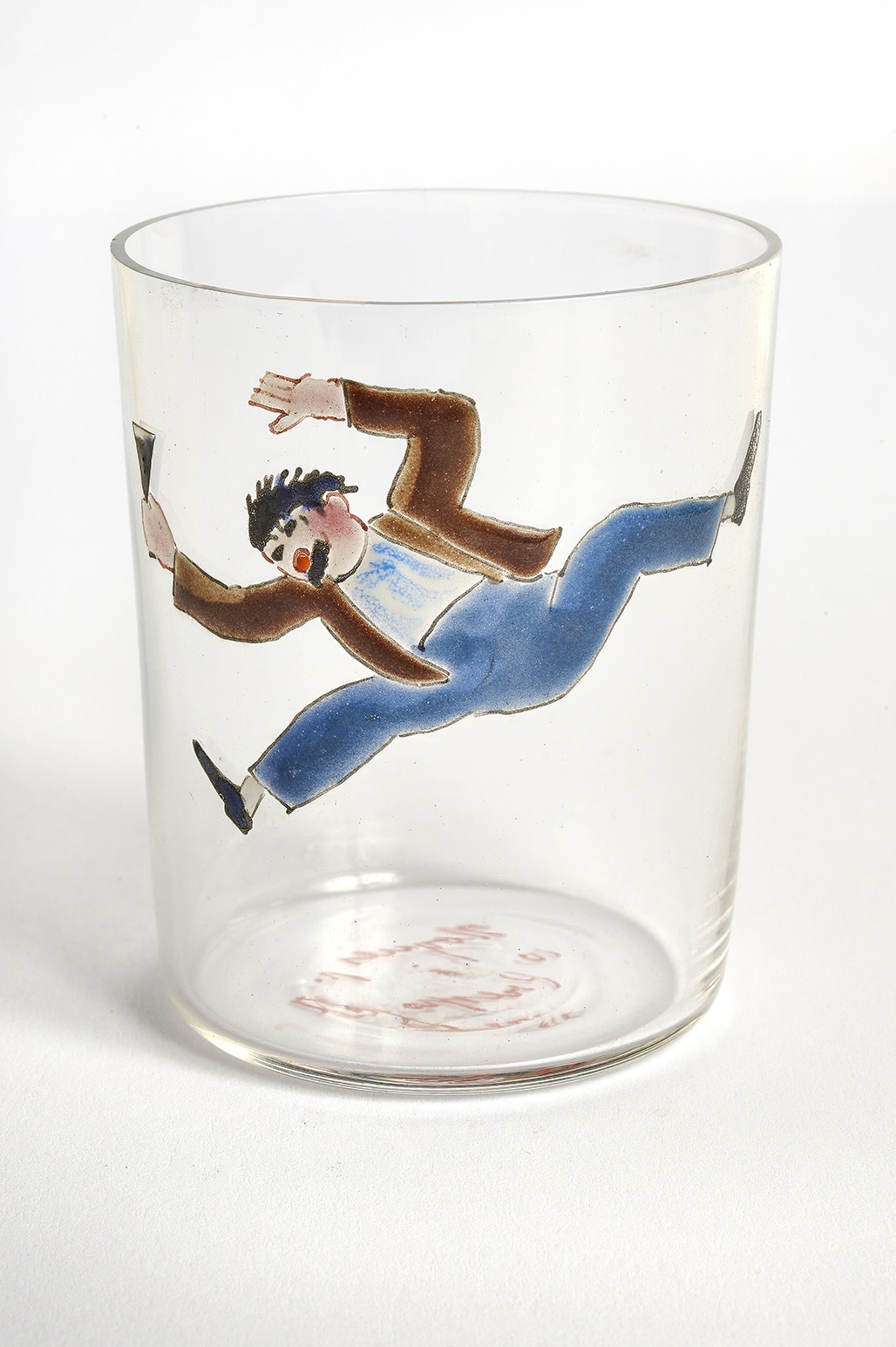
Glass with a drunken man holding a glass and jumping with his legs wide apart
Ref Num.: V0103
Details
Date: 1924-1928
Typology: Enamelled glass
Technique: Enamelled glass
Dimensions: 6 x 4.2 (base) x 4.8 cm (diameter)
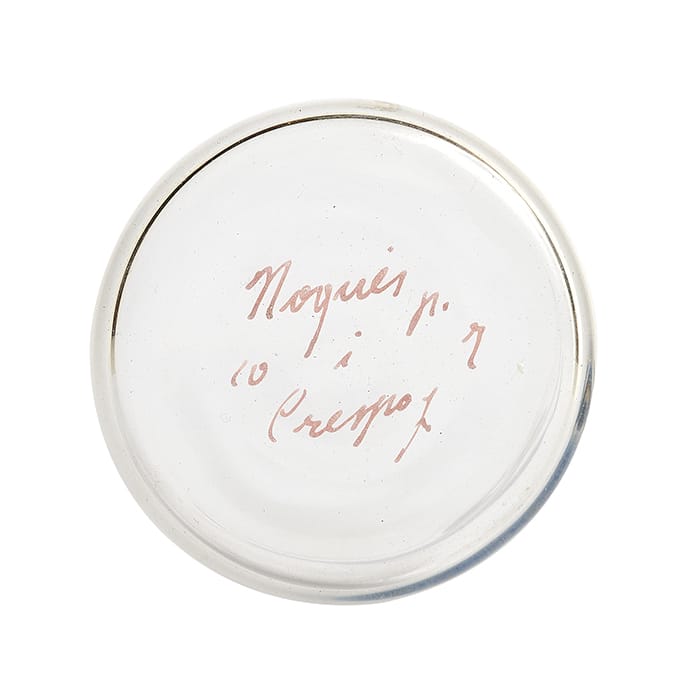
Signed: Signed on the base: “Nogués p. 10 / Crespo f. 7”
Location
Barcelona – Galeria Clavell & Morgades
Description
Glass featuring a drunken man holding a glass of wine and jumping with his legs wide apart. Part of a set of six wine glasses. Two examples of this glass have been found in Barcelona. One at the Palau Antiguitats gallery and another at the Clavell & Morgades gallery. In both cases the glasses came from unspecified private collections. The photographs show the glass from the Clavell & Morgades gallery as they are the best available images of the piece.
We would like to thank the Clavell & Morgades gallery and the Palau Antiguitats for their assistance in cataloguing this work.
Provenance
Private collection
Exhibitions
Bibliography
Cecília Vidal, Xavier Nogués i els vidres esmaltats al foc, Publicacions Universitat de Barcelona, 1991.
Joan M. Minguet Batllori, Alliberar Xavier Nogués, exhibition catalogue, Palau Antiguitats, Barcelona, April-July 2022, no. 105.
Notes
With the collaboration of Conxa Domènech. Xavier Nogués is the author of the drawings and, sometimes, also of the pictorial transposition with enamel on the glass, Ricard Crespo was responsible for the firing of the pieces and Conxa Domènech de Crespo who also traced and reviewed Nogués’ drawings. The degree of Xavier Nogués’ direct participation is especially evident in the finishes and when compared with the original drawings.
